
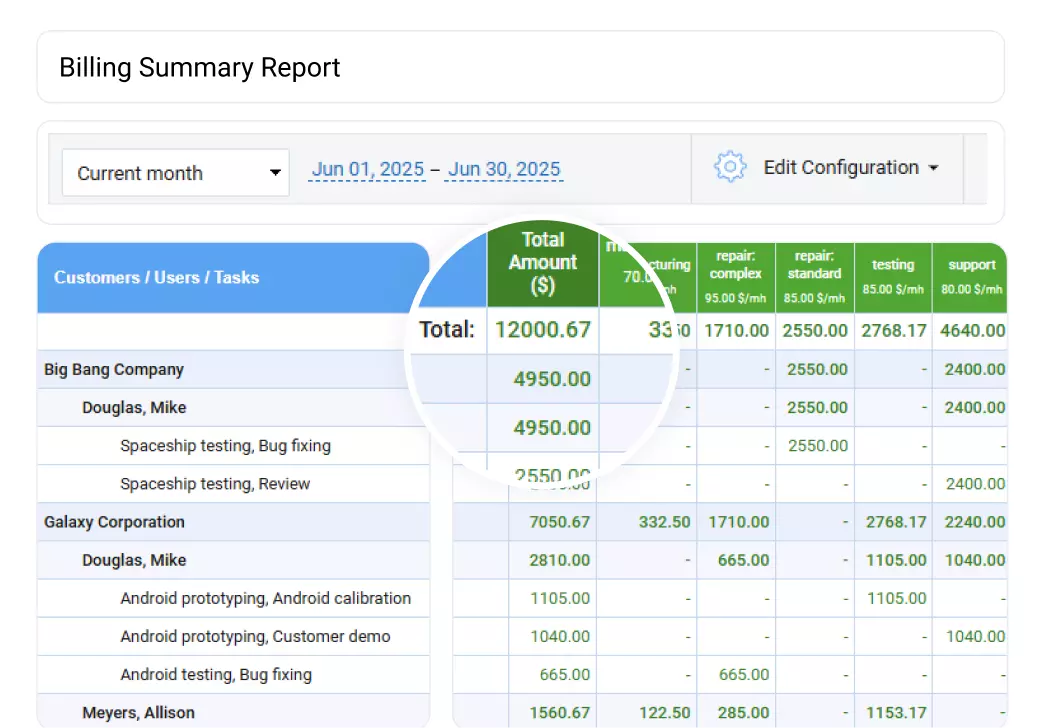
Engineering projects are defined by constraints: fixed budgets, regulatory requirements, technical dependencies, and delivery deadlines that can’t move without cascading consequences. Managing these constraints effectively requires more than a task list. It requires real-time data on where hours are going, which phases are on track, and where the schedule is starting to drift before it becomes a missed milestone.
Purpose-built time tracking for engineers provides that data layer. When every engineer logs time against specific tasks and phases, project managers have the information they need to make adjustments while there’s still room to act.
The Multi-Discipline Coordination Problem
Most engineering projects involve more than one discipline. Civil, structural, mechanical, and electrical engineers work on overlapping scopes with different deliverable timelines. When each discipline tracks time in a separate system — or not at all — the project manager is flying blind on actual resource consumption. A unified time tracking system with discipline-level task structures gives the PM a single source of truth across all teams.
Budget vs. Actual: The Metric That Matters Most
In engineering, the ratio of hours burned to hours budgeted is the leading indicator of project health. A project that’s 40% complete in calendar terms but has consumed 60% of its labor budget is in trouble — and that trouble is recoverable if you know about it at week 6, not week 14. Time tracking software that shows budget vs. actual by phase in real time is the difference between proactive and reactive project management.
For firms that operate across both engineering and construction phases, time tracking for architects and project leads bridges the gap between design-phase office work and construction-phase field labor — keeping cost data unified across the full project lifecycle.
Integrating with Project Management Tools
Engineering teams already use tools like Jira, Asana, or MS Project to manage tasks. Time tracking that integrates with these systems — or at minimum mirrors their project structure — reduces the administrative burden on engineers. The goal is a system where logging time takes less than two minutes per day and doesn’t require switching mental contexts from technical work to administrative work.
Team availability planning completes the picture. Time tracking for external consultants working alongside internal engineers, combined with absence management for the full team, gives project managers a realistic view of available capacity at any point in the project.
Implementation Without Disruption
Engineering teams are skeptical of tools that add overhead without clear benefit. The most successful implementations frame time tracking as a tool for better project scoping — not monitoring. When engineers see that accurate time logs lead to more realistic estimates on future projects, fewer late-stage crunches, and better justification for staffing requests, resistance drops. Start with one project, measure the impact, and let the data make the case for broader rollout.