
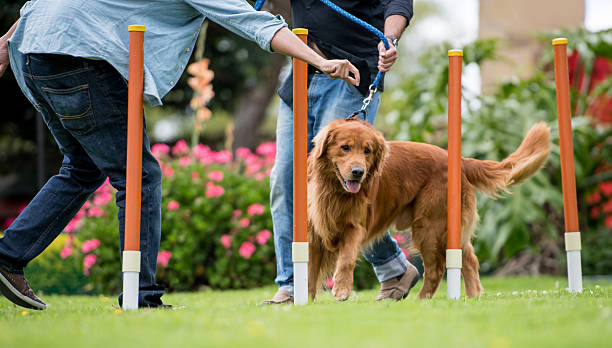
Few things test an owner’s patience like a dog that knows a command at home and acts as if it has never heard it outside. Distractions, unclear cues, weak reinforcement, and too much freedom too soon can all make trained behavior fall apart. Professional dog training in Murfreesboro TN can help identify why the response is inconsistent and rebuild the skill under conditions that match daily life.
A Known Command Can Still Be Weak Outside the House
Dogs do not automatically understand that “sit” in the kitchen means the same thing on a sidewalk, at a park, or near another dog. Learning is tied to context, so a behavior practiced only in quiet rooms may disappear once smells, movement, people, and traffic compete for attention. Experienced dog trainers often test commands in several settings to see whether the dog truly understands the cue or has only learned it in one familiar place. Gradual practice around manageable distractions helps the response become useful beyond the training room.
Repeating a Cue Can Teach a Dog to Wait
Owners often repeat “come,” “down,” or “leave it” when the first cue gets no response. That habit can teach the dog that the first word does not matter because nothing happens until the third or fourth repetition. Clearer Murfreesboro dog training puts more value on one cue, a brief chance to respond, and consistent follow-through. Reliable commands grow faster when the dog learns that the first request has meaning.
Timing also affects whether a dog connects the correct action with the reward. Delayed treats may reinforce standing up, looking away, or moving toward something else instead of the requested behavior. Precise reinforcement shows the dog exactly what earned the reward. Better timing is one reason people searching for dog training near me may benefit from having a trainer watch the interaction rather than relying only on written instructions.
High-Value Distractions Can Outrank Low-Value Rewards
Kibble may work perfectly in the living room and become meaningless beside a squirrel, another dog, or a busy trail. Motivation changes with the setting, and training needs to account for what the dog values at that moment. Skilled dog trainers may adjust distance, reward quality, movement, or session length so the dog can succeed without being pushed past its ability to focus. Strong responses develop through repeated wins, not by asking for the hardest version of a command too early.
Body Language May Be Saying Something Different From the Words
People often focus on the verbal cue while overlooking what their hands, shoulders, feet, and leash are doing. Handlers may say “stay” while leaning forward, stepping away too quickly, or tightening the leash in a way that pulls the dog out of position. Mixed signals make a command less clear even when the word itself is familiar. Good dog training in Murfreesboro TN can help owners notice these small conflicts and use cleaner signals that are easier for the dog to read.
Stress can create a different kind of communication breakdown. An anxious, overexcited, or frustrated dog may hear the cue but lack enough mental control to carry it out. Panting, scanning, whining, pacing, stiff posture, or constant movement can show that the environment has become too difficult for useful practice. Thoughtful training lowers the pressure, restores attention, and then asks for the behavior at a level the dog can handle.
Freedom Has to Match the Dog’s Current Reliability
Long leashes, open yards, busy parks, and off-leash spaces give a dog many chances to choose the environment over the handler. Too much freedom before a command is dependable can turn ignoring into a practiced habit. Structured Murfreesboro dog training often uses controlled setups where the dog can make choices without gaining full access to every distraction. As reliability improves, the handler can add distance and freedom without losing the ability to guide the dog.
Consequences matter as much as rewards because dogs notice what follows each choice. If ignoring “come” leads to another ten minutes of running while responding ends the fun, staying away may become more rewarding. Smart practice changes that pattern by making cooperation worthwhile and limiting chances to rehearse the wrong response. Families looking for dog training near me often need help fixing these everyday patterns more than they need a longer list of commands.
Consistency at Home Determines What Holds Up in Public
Different rules from family members can weaken even well-taught behaviors. One person may allow jumping, another may reward it with attention, and a third may ask for a sit, leaving the dog with several possible answers to the same situation. Household consistency gives commands a predictable meaning and makes progress easier to maintain. Simple shared rules for cues, rewards, boundaries, and release words can prevent confusion without turning the home into a constant training session.
Talking Tails can be a useful option for families whose dogs respond well in certain moments but ignore commands once excitement or distractions rise. Their Murfreesboro dog training services give owners a way to work with professionals who can observe the dog’s response patterns and identify where communication or practice is breaking down. Rather than assuming the dog is simply stubborn, focused training can build clearer expectations and more dependable behavior in the situations that matter most.