
Your Home’s Electrical System Is Doing More Work Than It Was Designed For
Think about what plugs into your electrical system on a typical day. The refrigerator and freezer running constantly. The HVAC system cycling on and off. The washer, dryer, and dishwasher running through their cycles. Multiple televisions. A gaming console or two. Laptops and monitors for working from home. Phone and tablet chargers in every room. Maybe an EV charger in the garage. Possibly a whole-house generator that needs to stay connected and maintained.
Now think about what the electrical system in a home built in 1988 was designed to handle. The loads are not even close. Most older residential electrical systems were sized for a world without EV chargers, smart thermostats, or four-bedroom households where every room has its own entertainment setup. Recognizing this gap — and having it professionally assessed and addressed — is one of the most responsible things a homeowner can do.
The Range of Residential Electrical Services
Comprehensive residential electrical services cover every aspect of a home’s electrical system, from the meter base where utility power enters the property to the last outlet on the most remote circuit. Panel assessments and upgrades address the capacity and safety of the distribution heart of the system. Circuit additions create dedicated power paths for high-demand devices. Rewiring projects replace deteriorated or undersized conductors throughout a home. Outlet, switch, and fixture replacement addresses failed or aging devices.
Beyond repairs and upgrades to existing systems, residential electrical services encompass new installations that improve both function and quality of life — whole-house surge protection, smart home integration, kitchen and bathroom circuit additions, outdoor power and lighting, home theater wiring, and security system power infrastructure. The breadth of what a fully capable residential electrician can handle is often larger than homeowners realize.
Panel Assessment: The Starting Point for Every Electrical Discussion
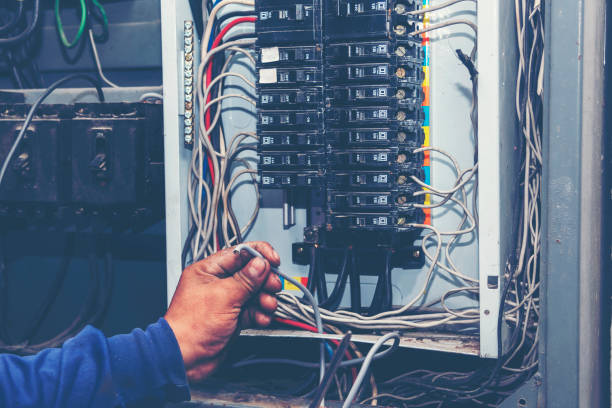
Before recommending any significant electrical work, experienced residential electricians want to see your panel. The panel tells a story about the history of electrical work done on the home, the adequacy of current capacity, the condition of breakers and connections, and whether any immediate safety concerns exist that need to be addressed before anything else.
A panel assessment typically takes fifteen to thirty minutes for a trained electrician and covers breaker condition, wiring organization, signs of heat damage or moisture, proper wire gauge for the circuits present, labeling accuracy, and overall system capacity relative to the connected loads. This assessment shapes every subsequent recommendation and ensures that the most important issues are addressed in the right priority order.
Grounding and Bonding: The Safety Infrastructure Most Homeowners Ignore
Electrical grounding and bonding are among the least understood but most critical aspects of residential electrical safety. The grounding system provides a low-resistance path for fault current to return to the source safely rather than routing through people or appliances. The bonding system connects all metallic components of the electrical and plumbing systems to ensure they are all at the same electrical potential.
Older homes — particularly those built before 1965 — often have two-prong outlets throughout, indicating an ungrounded system. Running ungrounded circuits in today’s world creates problems with modern electronics that rely on the ground for proper operation and surge protection. Addressing this through a whole-house grounding upgrade, the installation of GFCI outlets that provide shock protection even without a ground wire, or targeted rewiring of priority circuits is a meaningful safety improvement for any older home.
Smart Home Integration and Residential Electrical
Smart home technology is genuinely changing what residential electrical services involve. Whole-home audio systems, motorized window treatments, smart lighting controls, video doorbell systems, and whole-home networking infrastructure all have electrical components that require professional installation to work correctly and safely. The intersection of low-voltage and line-voltage systems in smart homes requires electricians who are comfortable working across both domains.
Many smart home devices also require a neutral wire at switch locations — something that older homes frequently lack, having been wired with only a hot wire running to switches. Adding neutral wires to switch locations, or selecting smart switch products designed to work without a neutral, requires electrical knowledge that goes beyond simply reading the device’s installation instructions.
Maintenance That Prevents the Emergency Calls
The most cost-effective residential electrical service available is preventive maintenance — periodic professional inspection of the electrical system to catch developing problems before they become failures or safety hazards. Loose connections, deteriorating insulation, corrosion at panel lugs, and improperly loaded circuits are all things that develop gradually and can be addressed inexpensively when caught early.
Homeowners who schedule a comprehensive electrical inspection every five to eight years, or whenever significant new loads are added to the system, consistently spend less on electrical services over the long run than those who only call an electrician when something stops working. The inspection cost is real but modest; the problems it prevents can be significantly more expensive and disruptive.