
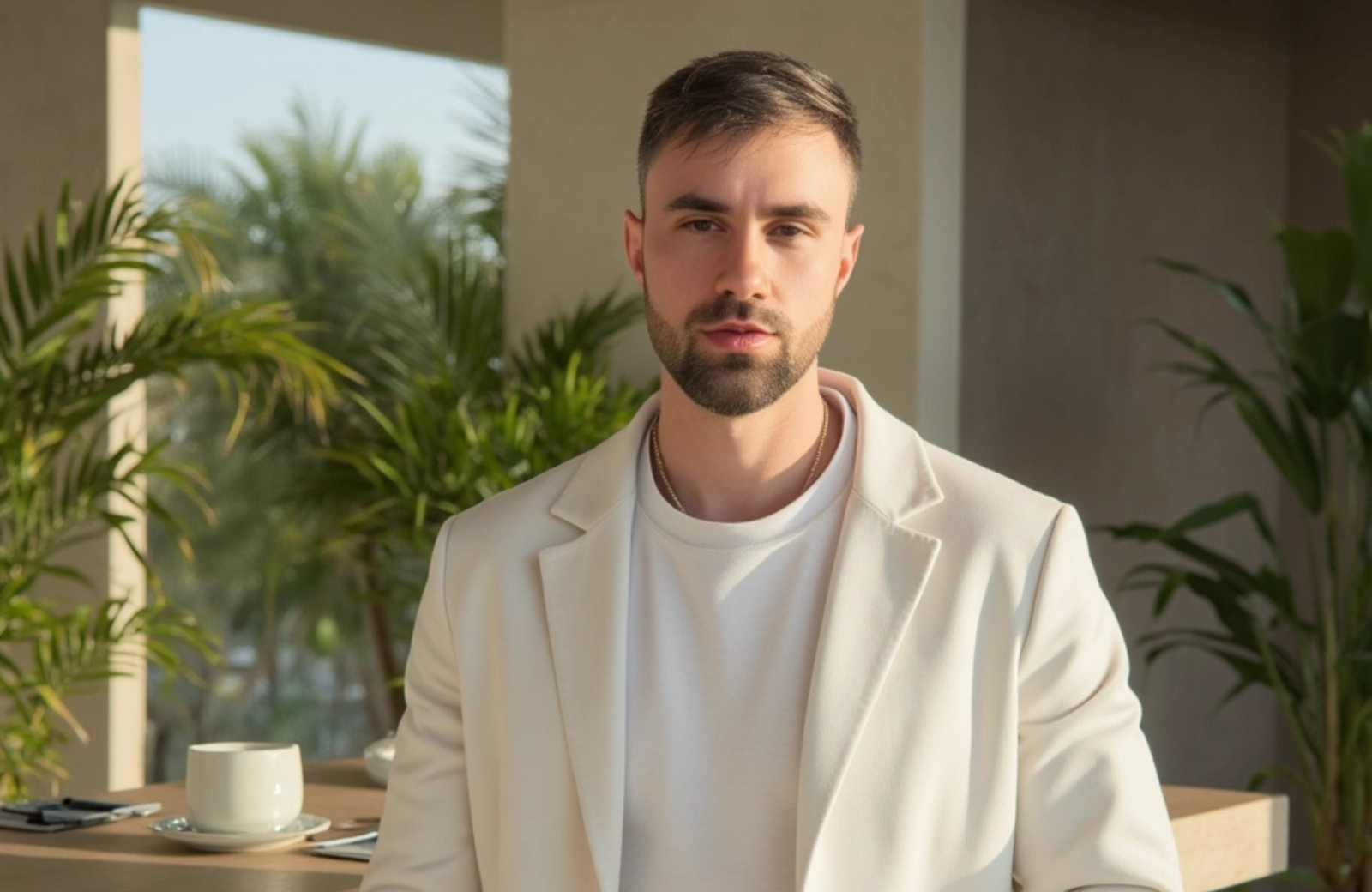
Ask most founders what limits how big their company can get, and they will point to funding, talent, or timing. Pablo Gerboles Parrilla points to something else: the quiet assumption that growth requires more people. He has spent years building software infrastructure around a different premise, one where the next wave of major companies gets run by a single founder, supported by systems that never clock out.
The Headcount Problem Nobody Questions
Most growth models still treat hiring as the default lever. Every new customer, every new market, every new product line seems to justify another round of hires. Gerboles Parrilla has watched that logic break down repeatedly inside DevOps teams built around automation-first thinking, where adding people to a broken system simply produces more broken output, faster.
Why DevOps Teams Keep Burning Out
Engineers tasked with shipping quickly, securing systems, scaling infrastructure, and responding to alerts at two in the morning are not doing one job. They are doing five. Most companies treat their DevOps function as a bandage for poor system design rather than fixing the design itself, throwing more humans at a problem that better architecture would have prevented in the first place. Firefighting every day erodes creativity and long-term thinking, and no engineer wants to live on call indefinitely.
The typical response is to hire another engineer, add another dashboard, and hope the alerts get quieter. They rarely do. Observability tools pile more data in front of already stretched teams without giving them any more context about what actually matters, which means headcount grows while the underlying problem, a system that requires constant human attention to function, stays exactly the same. Gerboles Parrilla has argued that this is the wrong axis to optimize entirely. The question is not how many people it takes to watch the system; it is why the system needs watching in the first place.
Removing Friction Instead of Adding Headcount
Gerboles Parrilla’s answer starts with a distinction most companies miss. “Velocity doesn’t mean rushing; it means removing friction,” he says. The fastest teams he has built are not the ones working the longest hours. They are the ones with the fewest blockers standing between an idea and its execution, which means fewer unnecessary approvals, more automated testing, and infrastructure that catches mistakes early instead of punishing them later.
Building Guardrails Into the System Itself
That philosophy extends to how his team designs for risk. Security gets built into the pipeline from the start rather than bolted on afterward, reflecting a broader pattern in his approach to automation: build the guardrails into the architecture itself, so quality does not depend on constant human supervision. A system designed this way scales without needing a proportional increase in the number of people watching it.
The Solo Founder Thesis
This is where the argument gets bolder. Gerboles Parrilla has said publicly that he expects to see the first billionaire who runs an entire company without a single employee. “I believe we’re going to witness something we’ve never seen before, the first billionaire who runs an entire company solo, with AI handling everything else,” he says. It sounds speculative until you watch how quickly automation has already compressed the backend work of running a modern business.
The shift is already visible in smaller ways. Tasks that used to require a coordinated team, customer research, first drafts of copy, and even parts of software development now take hours instead of weeks. None of that alone produces a solo billion-dollar company. What it produces is a founder who no longer needs to build a large organization just to keep pace with the operational demands of running one, which is a very different starting point than the one most businesses were built on.
Judgment Is the Bottleneck That Remains
None of this replaces the founder. “AI won’t replace good judgment, it’ll amplify it,” Gerboles Parrilla says, and the distinction shapes how he structures every venture he builds. Automation handles the repeatable and the predictable. What remains for the human at the center is vision, prioritization, and the willingness to make a call when the data runs out. Founders who are clear on what they are building and fast about executing it use artificial intelligence as leverage rather than a substitute for thinking.
What This Looks Like in Practice Today
The infrastructure needed for a solo-run company is not hypothetical. Anomaly detection, predictive maintenance, and automated incident response already exist inside modern DevOps systems, and the ongoing software infrastructure work behind Alive Devops keeps compressing the operational load that would otherwise require a growing headcount. The goal is not fewer jobs for the sake of it, but a business that can scale in output without scaling in complexity.
The Skills This Actually Requires
Running a company this way does not require less skill from a founder; it requires a different distribution of it. Less time spent managing people through routine tasks, more time spent designing the systems those people used to perform manually. Gerboles Parrilla treats this as the real shift underway in DevOps and infrastructure work more broadly: the founders who win the next decade will not necessarily be the ones who hire fastest; they will be the ones who need to hire the least in order to reach the same scale.
A Different Way to Measure Growth
Golf trained Gerboles Parrilla to trust a repeatable process over any single dramatic shot, and that instinct now shows up in how he thinks about company design. A business built on brittle manual processes will eventually need more people just to keep pace with itself. One built on intelligent, self-correcting systems can grow without adding a single name to the payroll. Whether or not the first solo billion-dollar company arrives on his timeline, the infrastructure making it possible is already being built.