
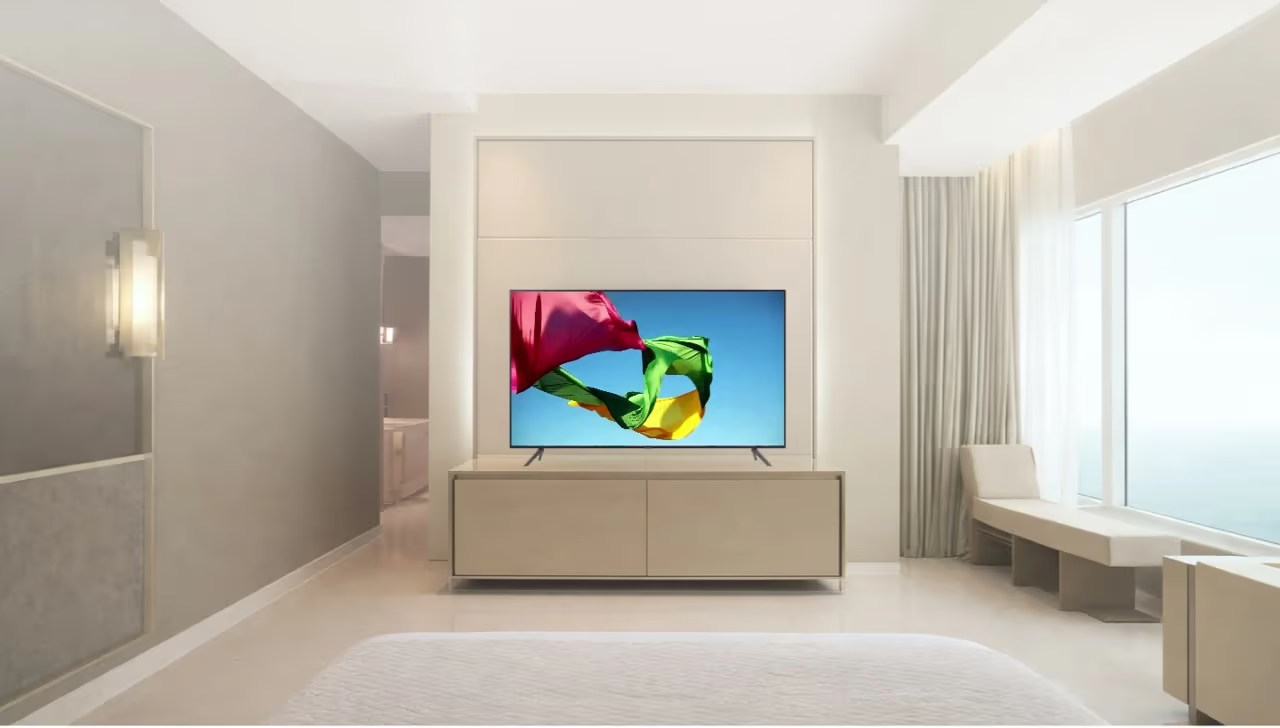
Hotel technology products are most effective when they makes a stay feel simpler, not when guests need an instruction manual to use the room. Across Europe, a growing collection of smart hotels is using mobile keys, automated check-in, integrated room controls and intelligent energy management to remove friction from the guest journey.
The following properties are not presented as a definitive ranking. Instead, they represent five of the most compelling examples of how European hotels are applying technology to improve convenience, comfort and operational efficiency.
KViHotel Budapest — Budapest, Hungary
KViHotel Budapest describes itself as a “360 smart hotel,” and its mobile-first experience begins before guests reach the lobby. Through the TMRW Hotels app, travelers can book a stay, check in remotely and receive a notification when their room is ready. Their smartphone then becomes a digital room key that can also be shared with travel companions.
Physical keycards and 24-hour reception assistance remain available, making the experience accessible to guests who prefer a more traditional arrival. This balance is important: the best hotel technology expands choice rather than eliminating human service.
Eccleston Square Hotel — London, United Kingdom
Behind the Georgian façade of Eccleston Square Hotel is one of London’s most technologically advanced boutique experiences. In-room iPads allow guests to manage lighting, curtains and temperature, while electronic SmartGlass bathroom walls change from transparent to opaque at the touch of a button. Rooms also include electronically adjustable Hästens massage beds and mirror televisions.
The property’s newer building management technology operates less visibly. It can place unoccupied rooms into an energy-saving setback mode, preserve returning guests’ environmental preferences and clear personal viewing information following checkout. This shows how smart hospitality can support personalization, privacy and energy efficiency simultaneously.
CityHub — Amsterdam, Rotterdam and Copenhagen
CityHub combines compact private sleeping cabins with technology-enabled communal spaces. Guests use a radio-frequency identification (RFID) wristband to enter their Hub and make purchases at the self-service bar, while the CityHub app serves as a digital travel companion.
The concept is particularly relevant to younger and experience-led travelers. It automates routine transactions without removing hospitality altogether: on-site “CityHosts” remain available to offer local recommendations and personal assistance.
BLOC Hotel London Gatwick — United Kingdom
Airport hotels are designed around speed and convenience, making Bloc Hotel London Gatwick a natural setting for a streamlined digital stay. The hotel’s web-based Smart Room Control requires no app download. Guests receive a secure link that lets them check in, unlock their room and check out from their own device.
The same interface controls room temperature, lighting, blinds and television channels. Because it operates in a browser, the system reduces a common obstacle in mobile hospitality: asking a guest to install another application for a single stay.
YOTEL — Multiple European Locations
YOTEL has built its identity around compact design and technology-supported travel. European properties pair self-service check-in kiosks with efficiently planned rooms, known as cabins in some locations, and the brand’s signature adjustable SmartBed. Smart hospitality televisions, multiple charging points and strong connectivity further reflect the needs of modern travelers.
YOTEL demonstrates that high-tech hospitality is not limited to luxury hotels. Technology can also help operators use space efficiently, accelerate arrival and give guests greater control at an accessible price point.
What Can Hoteliers Learn From Europe’s Smartest Hotels?
Europe’s most high-tech hotels do not all follow the same model. Some prioritize mobile access, while others focus on intelligent rooms, energy management or flexible self-service. Their shared lesson is that technology should solve a recognizable guest or operational problem.
Mobile keys can reduce front-desk queues. Integrated room controls can make comfort more intuitive. Building automation can limit wasted energy, and self-service tools can free employees to concentrate on interactions where human attention matters most. The future of hotel technology is therefore not hospitality without people, eit is hospitality in which people have better tools.