
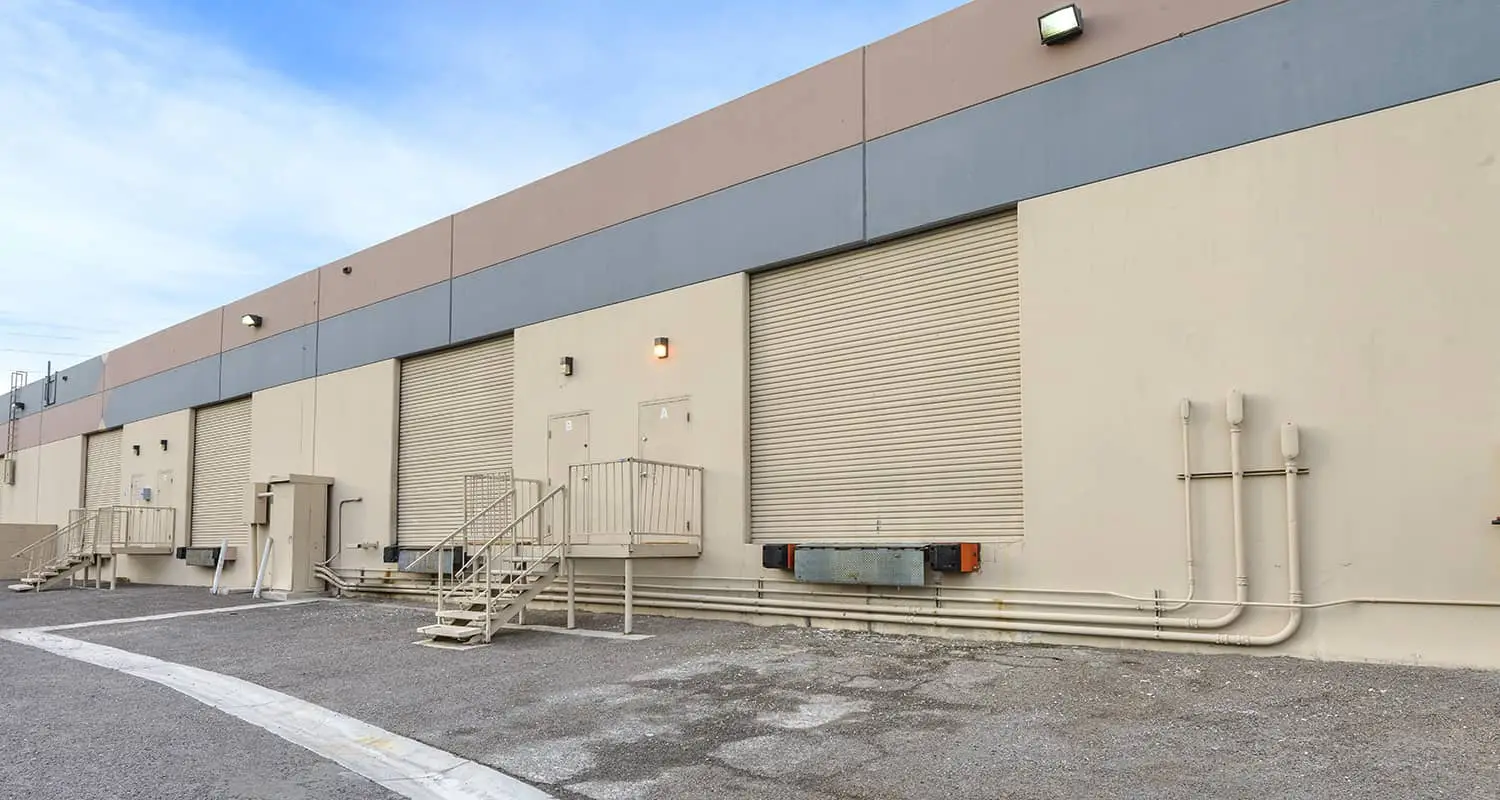
In industrial logistics facilities, manufacturing plants, and urban commercial spaces, heavy-duty roll-up and sectional doors operate under conditions vastly different from residential systems. Rather than opening twice a day, a busy distribution hub door may undergo dozens or even hundreds of cycles daily. Under these demands, overhead doors function as primary access valves in a facility’s workflow.
When a commercial door suffers mechanical downtime, operations stall, thermal energy escapes, and security risks increase. Understanding the mechanical physics of high-cycle overhead doors, specifically coil spring rating, shaft dynamics, and curtain structural fatigue, is essential for facility managers looking to optimize operational reliability and minimize lifecycle costs.
The Physics of Torsion Cycle Ratings in Commercial Systems
Every torsion spring manufactured for overhead door assemblies has a calculated cycle life. A single “cycle” consists of one full opening and closing sequence. Standard commercial doors are typically equipped with baseline 10,000 to 20,000-cycle springs. In a facility running 30 cycles per day, a 10,000-cycle spring will reach metal fatigue and snap in under a year.
Spring Wire Diameter and Pitch Calculation
Torsion springs store mechanical energy through twisting torque. The inner wire gauge, mean coil diameter, and total active length determine both the lifting power (IPPT, or inch-pounds per turn) and the spring’s cycle life rating.
Increasing a spring’s cycle life from 20,000 to 100,000 cycles does not simply mean making the spring stiffer; doing so would over-power the door and destroy the motor gear train. Instead, high-cycle engineering utilizes thicker wire stock wound over a longer spring body. This distributes the rotational strain over a larger surface area of steel, preventing microscopic stress fractures from propagating through the metal during repeated twisting motion.
Dual-Shaft and Continuous-Tension Configurations
For ultra-heavy rolling steel curtains or large sectional doors, single-shaft spring assemblies become physically impractical. High-demand industrial openings employ dual-shaft duplex spring setups or counter-balance assemblies equipped with continuous-duty oil-tempered springs. These systems share the rotational load, reducing mechanical stress on individual coils and extending operational cycles significantly.
Drive Operators and Mechanical Duty Cycles
While manual chain-hoist doors are common in low-frequency storage bays, high-traffic commercial environments rely on motorized commercial drive operators. Matching operator horsepower and drive type to facility usage patterns prevents motor burnouts and drive-gear failures.
Thermal Protection and Continuous-Duty Ratings
Standard residential door openers use intermittent-duty motors equipped with thermal overload switches that shut down the motor after a few minutes of continuous running. Commercial operators feature continuous-duty motors with cast-iron gearboxes, oil-bath lubrication, and high-starting-torque capacitor setups designed to run continuously without thermal tripping.
Speed Governors and Soft Start/Stop Logic
Modern high-speed commercial doors use variable-frequency drives (VFDs) that gradually accelerate the curtain during initial lift and decelerate it right before hitting the header or floor stop. Eliminating hard mechanical stops reduces kinetic shock forces across the drive chain, roller tracks, and panel hinges, doubling the lifespan of track hardware.
Structural Resistance to Wind Load and Physical Impact
Commercial door panels face significant environmental and mechanical forces beyond internal cycling. Large industrial bay openings act as pressure funnels during severe weather, while forklift traffic in tight loading zones poses a constant threat of physical impact.
Wind Load Engineering and Endlocks
When high winds hit a large rolling curtain door, negative pressure pulls the curtain outward, attempting to strip the steel slats from their vertical guide channels. Commercial wind-rated doors incorporate heavy cast-iron or steel windlocks riveted to the ends of alternating curtain slats. These windlocks engage structural steel guide channels, holding the curtain securely within the tracks even under hurricane-force wind loads.
Impact-Resistant Knock-Out Designs
In fast-paced warehouse environments, forklift bumps are a leading cause of door failure. Traditional rigid door panels buckle when struck, locking the door inside the track channels and halting bay activity. Impact-resistant or “knock-out” sectional doors utilize flexible fiberglass or dense composite bottom sections paired with spring-loaded track pins. When struck, the door panel disengages cleanly from the track without structural damage and can be reset into the track channels in minutes.
Preventive Maintenance Protocols for Industrial Facilities
Unplanned commercial door failure leads to direct operational losses. Implementing a structured maintenance schedule prevents structural wear from turning into costly emergency downtime:
- Bearing and Shaft Alignment: Inspecting pillow block bearings along the drive shaft prevents shaft scoring and reduces rotational drag on the operator.
- Cable Tension and Drum Inspection: Ensuring balance cables wind evenly across grooved aluminum drums prevents cable fraying and cocked door panels.
- Safety Edge Testing: Testing pneumatic or optical bottom safety edges ensures that doors reverse immediately upon contact with personnel or cargo.
- Curtain Alignment and Slat Lubrication: Cleaning and lubricating vertical guide channels prevents metal-on-metal binding and extends slat hinge lifespan.
Specialized Commercial Upgrades and Service
Selecting, installing, and maintaining heavy-duty commercial door assemblies requires specialized equipment, welding expertise, and an understanding of commercial building codes. High-tension commercial springs and industrial operators operate under intense physical forces that demand precise technical handling.
When upgrading industrial access points, retrofitting high-cycle counterbalance systems, or resolving complex mechanical binding, partnering with commercial specialists like Commercial Door Solutions by EK ensures that door assemblies, safety devices, and drive motors are engineered to meet the exact operational demands of your facility.
Investing in robust high-cycle engineering, proper motor duty ratings, and proactive structural maintenance keeps commercial facilities secure, energy-efficient, and operating at peak productivity day after day.