
Semaglutide is a long-acting analogue of human glucagon-like peptide-1 (GLP-1) designed to maintain activity at the GLP-1 receptor (GLP-1R) over an extended pharmacokinetic interval. Consequently, evaluating semaglutide side effects requires more than compiling a list of reported symptoms. Scientific interpretation involves receptor pharmacology, exposure kinetics, dose-escalation design, gastrointestinal physiology and the methods used to collect and classify adverse events. Large Phase 3 datasets have identified gastrointestinal disorders as the most frequently reported adverse-event category, with events occurring most prominently during treatment initiation and escalation. At the molecular level, semaglutide’s prolonged exposure is associated with structural modifications that increase albumin binding and resistance to metabolic degradation. Comparing this GLP-1 biology with GLP-2 receptor signalling also provides a useful framework for laboratory studies examining incretin receptor selectivity, cellular signalling and peptide analytical quality.
Understanding Incretin Signalling and Adverse Profiles
GLP-1 and glucagon-like peptide-2 (GLP-2) are related incretin-family peptides generated through tissue-specific processing of the proglucagon precursor. Their common biochemical origin does not mean that they have identical receptor pharmacology. GLP-1 principally interacts with GLP-1R, whereas GLP-2 interacts with the separate GLP-2 receptor (GLP-2R). Both receptors belong to the class B family of G-protein-coupled receptors (GPCRs), but they differ in ligand recognition, tissue distribution and downstream biological signalling.
GLP-1R activation is strongly associated with Gs-mediated stimulation of adenylyl cyclase and increased intracellular cyclic AMP (cAMP). Depending on the experimental system, this can activate protein kinase A and exchange proteins directly activated by cAMP, followed by changes in phosphorylation, ion-channel activity and transcriptional responses. GLP-1R is therefore frequently studied through receptor-binding experiments, cAMP accumulation assays, beta-arrestin measurements and receptor-internalisation studies.
GLP-2R represents a different experimental target. Research into GLP-2 receptor localisation has identified receptor-associated signals in gastrointestinal cellular populations, including subepithelial myofibroblasts and enteric neuronal compartments. These findings indicate that GLP-2 signalling can involve intermediary cells rather than requiring direct receptor activation on every epithelial cell affected downstream. Receptor localisation must therefore be interpreted alongside the experimental method, species and tissue preparation.
Semaglutide demonstrates an important principle in peptide pharmacokinetics: fatty-acid acylation can substantially alter exposure characteristics. Native GLP-1 has a short biological lifetime because it is susceptible to enzymatic degradation and rapid clearance. Semaglutide was developed through structural modification of GLP-1, including amino-acid substitutions and derivatisation at lysine 26 with a fatty-acid-containing moiety. The published discovery work described increased albumin affinity, GLP-1R potency and prolonged exposure, with a plasma half-life of approximately 46 hours in mini-pigs following intravenous administration in the reported experimental work.
Albumin binding can reduce renal filtration and modify effective clearance. This concept is relevant to wider peptide research, where lipidation is investigated as a way of changing serum-protein binding and pharmacokinetic behaviour. A prolonged pharmacokinetic profile does not mean that every biological response is prolonged identically; receptor distribution, signalling kinetics and tissue exposure also contribute.
Gastrointestinal physiology provides another connection between receptor signalling and the clinical adverse-event literature. GLP-1 signalling is associated with pathways influencing gastric motor activity and gastric emptying, while GLP-2 has been studied in relation to gastrointestinal motility, mucosal signalling and intestinal physiology. These are not interchangeable effects because they arise from different receptors and cellular signalling networks.
The concept of receptor localisation is particularly important. An experimental paper may identify receptor messenger RNA, receptor protein, receptor-positive cells or functional receptor activity, and these represent different levels of evidence. Detection of receptor transcript does not automatically establish the same level of functional signalling demonstrated by a receptor-mediated second-messenger response.
Consequently, when researchers interpret semaglutide side effects, it is useful to maintain three separate analytical levels: molecular mechanism, physiological response and clinically recorded adverse event. A clinical trial adverse-event term is not a direct molecular measurement. Conversely, a receptor assay cannot reproduce the complexity of a whole-organism adverse-event dataset. Understanding these distinctions helps prevent overinterpretation of mechanistic data and supports rigorous comparative GLP-1 and GLP-2 research.
Primary literature supporting the molecular design of semaglutide includes the published discovery and pharmacological characterisation study:PubMed: Discovery of the Once-Weekly GLP-1 Analogue Semaglutide.
What Clinical Trial Literature Shows on Side Effects
The clinical literature provides detailed evidence for characterising semaglutide tolerability because adverse events were collected prospectively under predefined trial protocols. Phase 3 programmes also provide an opportunity to examine event frequency over time, including changes associated with initiation and dose escalation.
A large pooled analysis evaluated safety and tolerability across 16 randomised Phase IIIa trials from the SUSTAIN and PIONEER programmes. The dataset included 11,159 participants and incorporated subcutaneous and oral semaglutide programmes. Gastrointestinal disorders were reported in 41.9% of participants receiving subcutaneous semaglutide and 39.1% receiving oral semaglutide, compared with 22.0% and 24.8% among comparator groups. Gastrointestinal events were most prevalent during treatment initiation and escalation.
This timing is central to understanding semaglutide side effects. A trial-wide percentage represents all observations over a defined study period, but it does not indicate that the event occurred at a constant rate throughout the trial. If events are concentrated around escalation, an analysis that ignores treatment stage may conceal an important temporal relationship.
The STEP 1–3 pooled gastrointestinal analysis reported nausea in 43.9% of semaglutide participants versus 16.1% with placebo, diarrhoea in 29.7% versus 15.9%, vomiting in 24.5% versus 6.3%, and constipation in 24.2% versus 11.1%. Most gastrointestinal adverse events were reported as non-serious and mild-to-moderate, and events were generally transient and most frequent during or shortly after dose escalation.
These data illustrate why nausea kinetics should be considered separately from overall event incidence. A transient event concentrated around escalation represents a different temporal pattern from an event that begins later and persists throughout observation.
The relationship between exposure and gastrointestinal events is also relevant to dose-dependency. Clinical protocols have generally used staged escalation rather than immediately introducing the eventual study maintenance exposure. Escalation therefore creates a sequence of changing exposure conditions in which systemic concentrations and receptor exposure change over time.
Comparative incretin studies provide another perspective. Head-to-head clinical trials have reported gastrointestinal disorders among commonly recorded adverse events when comparing semaglutide with other GLP-1 receptor agonists. Such datasets can place semaglutide observations within a broader incretin pharmacology context, but direct comparison still requires attention to population, treatment duration, escalation schedule, formulation and event-collection methodology.
Adverse-event recording itself is a methodological process. A participant may report a symptom, an investigator may assess its severity and clinical significance, and the event may subsequently be coded according to standardised medical terminology. The final database is therefore a structured classification of observations rather than a direct assay of receptor activity.
Researchers should examine the number of participants exposed, duration of observation, treatment stage at event onset, event severity, seriousness, discontinuation, resolution and comparator rate. A mild, short-duration nausea report during escalation and a persistent event leading to withdrawal may appear under related terminology but have different implications for interpretation.
This is particularly important when discussing semaglutide side effects because percentages can be misleading when separated from their denominator and observation window. A frequency reported over an entire trial should not automatically be interpreted as the probability of an event at every point in exposure.
Clinical observations are influenced by exposure, participant characteristics, concomitant treatments, reporting behaviour and protocol design. Mechanistic interpretation therefore benefits from integrating clinical datasets with receptor pharmacology and analytical chemistry rather than treating any one dataset as complete.
For the primary Phase III safety dataset, see PubMed: Safety and tolerability across SUSTAIN and PIONEER.
Comparative Incretin Pharmacology
GLP-1 and GLP-2 provide a useful example of how structurally related peptide hormones can produce different pharmacological profiles. Both arise from proglucagon processing, but their receptors, tissue distribution and downstream signalling systems are distinct.
GLP-1R signalling is widely investigated through pathways associated with cAMP production and downstream kinase activation. Cellular pharmacology can measure receptor binding, cAMP accumulation, beta-arrestin recruitment and receptor internalisation. These measurements provide different information: binding assays primarily address ligand-receptor interaction, whereas functional assays examine what happens after receptor engagement.
GLP-2R has a different biological context. Foundational receptor-characterisation research demonstrated that GLP-2R is a distinct GPCR expressed in gastrointestinal-associated tissues and that GLP-2 can produce receptor-dependent cAMP responses. This establishes a key experimental distinction: GLP-2 activity cannot simply be inferred from GLP-1 receptor activity.
The distinction becomes more significant at the tissue level. GLP-2R-associated expression has been investigated in subepithelial myofibroblasts and enteric neuronal populations. Experimental work suggests that GLP-2 signalling can influence intestinal cellular responses through intermediary growth-factor and neural pathways rather than simply acting as a direct epithelial signal. The phrase intestinal trophic signalling should therefore be understood as a network-level description rather than a single receptor-to-cell pathway.
The term GLP-1-associated satiety signalling similarly describes a network involving receptor activation, central and peripheral neural pathways, gastrointestinal feedback and other physiological inputs. For laboratory purposes, researchers should avoid reducing this network to a single molecular endpoint.
GLP-2 receptor localisation has been investigated using several methods, including molecular detection, tissue analysis and receptor-specific assays. These techniques do not provide identical evidence. Detection of receptor messenger RNA is not equivalent to demonstrating functional receptor protein, and receptor protein detection is not equivalent to demonstrating ligand-dependent signalling.
A useful laboratory model therefore separates receptor presence from receptor function. The receptor-expressing system should first be validated independently. Ligand interaction can then be assessed using binding or competition studies, followed by functional signalling assays and, where relevant, tissue-level measurements.
This layered approach is important when comparing GLP-1 and GLP-2. A peptide may demonstrate measurable binding to a receptor but produce a different functional response. Conversely, similar second-messenger responses do not necessarily mean that two peptides have identical downstream signalling or tissue behaviour.
The distinction between GLP-1 and GLP-2 is also relevant to interpreting gastric and intestinal physiology. GLP-1-related receptor activity has been studied in relation to gastric emptying and gastrointestinal neural pathways, while GLP-2 research has examined intestinal motility, mucosal signalling and epithelial-associated biology. These overlapping anatomical systems should not be mistaken for identical pharmacological pathways.
For research into semaglutide side effects, this comparative framework provides useful context. Semaglutide’s clinical adverse-event profile is associated with GLP-1 receptor agonism, but mechanistic interpretation cannot be reduced to a generic incretin effect. GLP-1R activation, gastrointestinal motor pathways, neural signalling and exposure kinetics must be considered together.
Similarly, GLP-2 should not be considered a substitute experimental proxy for GLP-1. Although both peptides belong to the same broad biological family, receptor selectivity and downstream signalling are sufficiently different to require independent experimental validation.
Comparative peptide studies are strongest when they use matched receptor systems, equivalent assay conditions and multiple analytical endpoints. This can help determine whether an observed difference originates from receptor affinity, efficacy, signalling pathway preference, receptor distribution or downstream cellular biology.
Foundational evidence for the distinct GLP-2 receptor and its receptor-dependent signalling is available in PubMed/PMC: Prototypic GPCR for glucagon-like peptide 2.
Research Applications
Incretin receptor research can be conducted using techniques ranging from purified receptor-binding systems to complex intestinal tissue models. Rigorous experimental design generally uses multiple complementary methods because no single assay provides a complete description of peptide pharmacology.
Receptor-binding assays provide a fundamental starting point. Competitive binding experiments can determine whether a peptide interacts with GLP-1R or GLP-2R and can produce quantitative affinity estimates under controlled conditions. Depending on the platform, laboratories may use radioligand displacement, fluorescence-based approaches or other validated receptor-occupancy techniques.
Binding affinity does not necessarily predict functional response. A second experimental layer is therefore required. Cell-based signalling assays can measure receptor-dependent changes in intracellular cAMP. Because GLP-1R and GLP-2R are class B GPCRs, cAMP-based assays can be useful for characterising receptor activation under defined conditions.
Appropriate controls are essential. Receptor-negative cells can help distinguish receptor-dependent effects from non-specific responses, while a validated reference ligand can provide a benchmark for assay performance. Independent replicates also help distinguish reproducible pharmacology from technical variability.
Beta-arrestin recruitment and receptor-internalisation assays can provide additional information because receptor activation is not necessarily a single pathway. Different ligands may produce different relative activation of downstream signalling routes even when their primary receptor is the same.
Phosphoproteomic or targeted signalling assays can extend the investigation further. Measurements involving protein kinase A, protein kinase B, extracellular signal-regulated kinase or other pathway markers may help identify downstream consequences of receptor activation.
For GLP-2-focused research, intestinal tissue and barrier assays provide another experimental layer. Researchers may work with epithelial monolayers, organoid-derived systems, ex vivo intestinal preparations or co-culture models. Endpoints may include transepithelial electrical resistance, permeability to defined tracers, tight-junction-associated proteins and transcriptional responses.
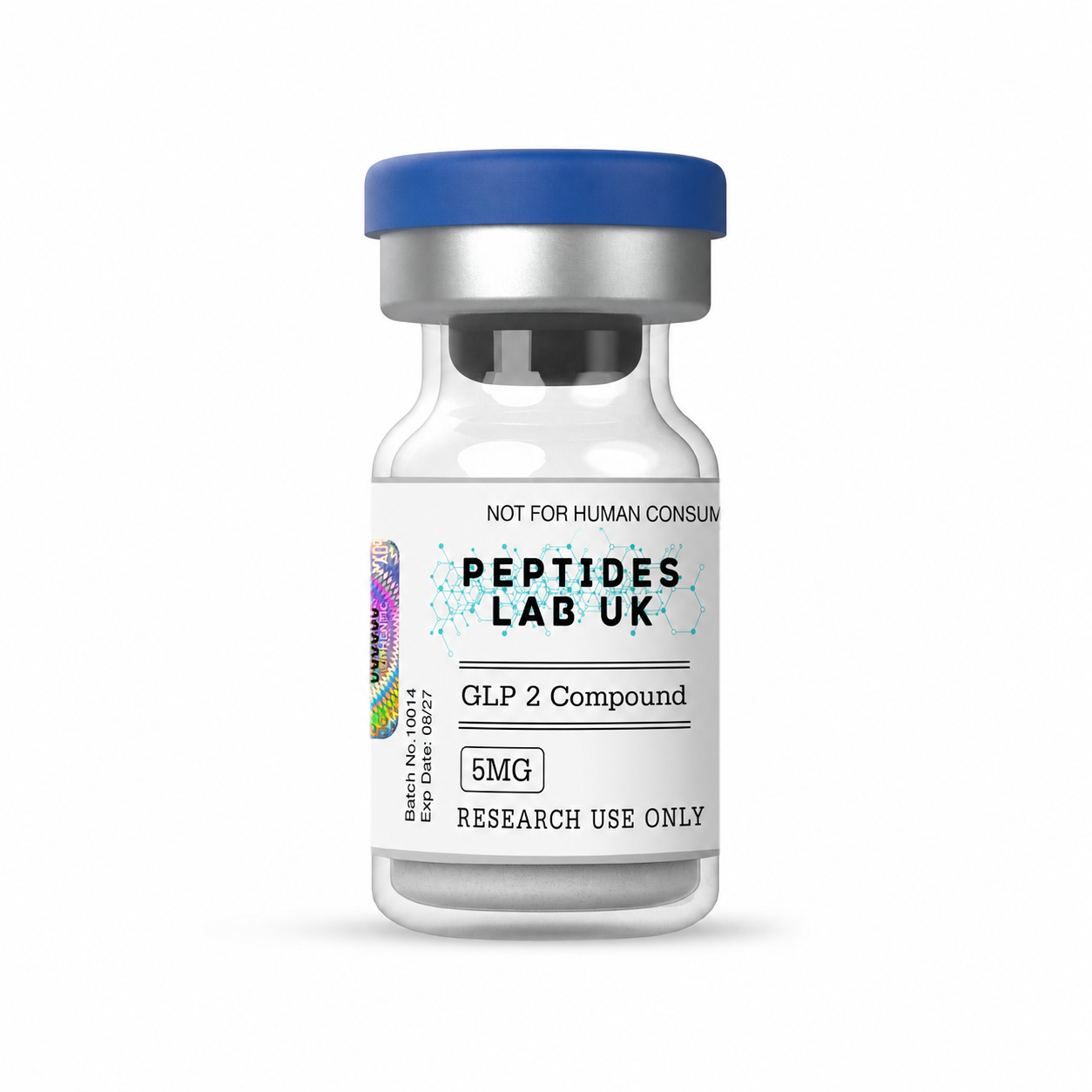
When selecting a high-purity GLP receptor research peptide for intestinal epithelial, receptor-binding or cellular signalling assays, laboratories should prioritise documented molecular identity, chromatographic purity, appropriate storage conditions and batch-specific analytical records.
Chemical degradation can introduce biological confounders. Oxidation, truncation, deamidation or other modifications may alter receptor interaction or downstream signalling. Without analytical verification, an unexpected assay response may be incorrectly interpreted as a property of the intended peptide.
Comparative peptide research can investigate receptor selectivity directly. Matched GLP-1R and GLP-2R systems can be evaluated under equivalent experimental conditions. If a peptide produces a response in one receptor system but not the other, receptor selectivity becomes experimentally demonstrable rather than merely inferred.
A robust comparative workflow can include receptor-expression verification, ligand-binding measurements, concentration-response analysis, cAMP signalling, beta-arrestin or internalisation measurements, downstream phosphorylation analysis, LC-MS identity confirmation, HPLC purity assessment, receptor-negative controls and independent experimental replicates.
This layered design helps separate variables that can otherwise become conflated. A receptor-binding difference is not necessarily a signalling difference, and a signalling difference is not necessarily equivalent to a tissue-level response.
Researchers should maintain a strict boundary between laboratory findings and clinical interpretation. A receptor-transfected cell line lacks the physiological complexity of a whole organism. Similarly, an intestinal barrier model cannot independently establish clinical significance. Such systems are valuable because they isolate specific mechanisms under controlled conditions.
Laboratory results should be reported with sufficient methodological detail to allow replication. Important variables include receptor expression system, ligand concentration range, incubation period, assay temperature, control conditions, replicate number and analytical method.
Comparative incretin research can benefit from orthogonal validation. If a cAMP response is observed, a second receptor-dependent endpoint can help determine whether the finding is reproducible through an independent pathway. Analytical confirmation of peptide identity can establish that the biological experiment used the intended molecular species.
This approach is relevant when investigating GLP-1 receptor agonists with structural modifications. Changes in lipidation, amino-acid sequence or linker chemistry can alter albumin binding, receptor affinity and exposure characteristics. Structural similarity alone is insufficient for predicting experimental behaviour.
Purity, Storage and Handling
Analytical verification is an essential part of peptide research because biological interpretation depends on the identity and integrity of the material used. A product label alone does not establish molecular identity, chromatographic purity or stability.
For research applications, HPLC purity of ≥98% is a commonly specified benchmark. The precise acceptance criterion should nevertheless be defined according to the laboratory’s experimental requirements and quality-management system.
Reversed-phase HPLC can separate the principal peptide peak from related substances, truncated sequences and certain degradation products. The resulting chromatogram provides information about chromatographic composition but should not be treated as a complete molecular-identity test.
Mass spectrometry provides complementary molecular information. LC-MS or an appropriate MS method can compare measured molecular mass with expected mass and can help identify modifications such as oxidation, truncation or other mass-altering changes.
When UK laboratories review published trial data concerning Semaglutide side effects alongside comparative incretin studies, verifying analytical documentation helps maintain a clear distinction between published clinical observations and the characteristics of an individual research batch.
Published clinical trial data describe defined pharmaceutical materials manufactured under controlled specifications. A separate laboratory research sample should not automatically be assumed to have identical formulation, excipient composition, manufacturing controls or stability characteristics.
For lyophilised research peptides, -20°C is commonly used as a controlled long-term storage condition where supported by stability documentation. Storage requirements should ultimately follow the relevant batch documentation because different peptide structures can have different stability characteristics.
Repeated temperature cycling should be minimised. Moisture exposure, repeated opening and uncontrolled temperature changes can potentially influence peptide integrity. Maintaining stable storage conditions also improves experimental reproducibility when multiple batches are compared.
Laboratories should maintain documentation covering batch or lot identification, certificate of analysis, HPLC purity, mass-spectrometric identity confirmation, storage temperature, relevant stability information, analytical test dates and experimental traceability.
Stability testing should ideally use defined analytical endpoints rather than relying only on visual appearance. A material may appear unchanged while experiencing chemical modification detectable by chromatography or mass spectrometry.
Chemical purity and biological activity should be distinguished. A high HPLC purity value does not automatically prove that a peptide will generate a particular receptor response, while a biological response does not establish that a sample is chemically homogeneous.
An analytical hierarchy is therefore useful: HPLC can assess chromatographic purity, mass spectrometry can verify molecular identity, and functional assays can evaluate biological activity within a defined experimental system.
Storage records should be considered part of the experimental dataset rather than separate administrative information. A well-documented programme can connect a specific batch to its certificate of analysis, analytical results, storage history and biological assay outcomes.
The broader principle is straightforward: analytical verification precedes biological interpretation. Establishing what material entered the assay provides the foundation for determining what the assay subsequently measured.
Frequently Asked Questions
What does dose escalation show about semaglutide side effects?
Published Phase 3 analyses indicate that gastrointestinal adverse events were most prevalent during treatment initiation and dose escalation. The pattern is protocol-dependent, so researchers should compare escalation schedules, observation windows and analytical populations rather than treating one frequency as universal.
Is semaglutide selective for GLP-1R rather than GLP-2R?
Semaglutide was developed as a GLP-1 analogue whose pharmacology centres on GLP-1 receptor activity. GLP-1R and GLP-2R are distinct class B GPCRs with different ligand-recognition and tissue-localisation profiles. Laboratory research should demonstrate receptor selectivity using receptor-specific binding or functional assays.
How should lyophilised peptide research material be stored?
Lyophilised research peptides are generally maintained under controlled low-temperature conditions appropriate to the specific material. A temperature of -20°C is commonly used for long-term storage when supported by stability documentation. Laboratories should minimise temperature cycling, maintain batch traceability and follow documented storage requirements.
Why is ≥98% HPLC purity not enough to verify a peptide?
HPLC purity describes chromatographic composition but does not independently establish molecular identity. Mass spectrometry provides complementary molecular-mass information and can help identify certain modifications or degradation products. Functional controls provide another level of validation because chemical purity, molecular identity and biological activity are separate analytical properties.
Closing Disclaimer: The compounds and information discussed in this article are intended strictly for in-vitro laboratory research and analytical investigation only. They are not intended for human or veterinary use, and this article does not provide dosing, administration, treatment or personal-use guidance.