
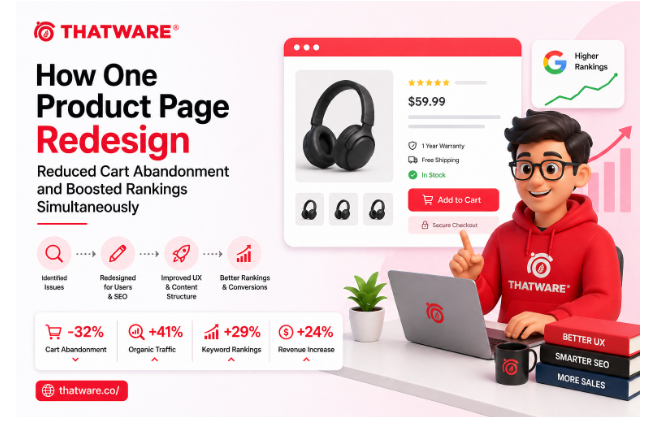
The assumption most e-commerce teams carry is that SEO and conversion optimization are in tension. Optimize the page for search and it gets cluttered. Optimize it for conversion and it loses the content signals that help it rank.
In practice, this tension is mostly false. But hitting both targets requires understanding what “useful to a buyer” really means – which most product pages don’t.
The Real Problem: Answering “What Is This” But Not “Should I Buy This”
Here’s an example that illustrates the point. An outdoor gear retailer had a sleeping bag product page that was technically complete – proper schema markup, clear specs table, keyword-optimized title and meta description. It ranked reasonably well. It also had a cart abandonment rate noticeably above category average.
The product page seo analysis revealed the problem almost immediately. The page answered “what is this sleeping bag” very well and “should I buy this sleeping bag for my specific situation” not at all. The spec table listed temperature rating, weight, fill power, and materials. It didn’t explain what those specs actually meant for different use cases – three-season backpacking vs winter camping vs car camping. It didn’t address the most common buyer questions.
What the Redesign Did Differently
The redesign addressed this directly. Not by adding a wall of keyword-stuffed text, but by adding genuinely useful contextual content – a short use-case guide (“right for you if…”), answers to the three most common questions in FAQ format, and an honest comparison with the adjacent product in the lineup. The overall word count went up modestly. The page structure improved for both readability and structured data.
The results were measurable on both dimensions. Rankings improved across the relevant long-tail queries. Cart abandonment dropped significantly because buyers who weren’t the right fit were self-selecting out before adding to cart, and buyers who were the right fit were more confident in their decision.
Shopify SEO Services and Template Constraints
Shopify seo services for product pages specifically involve navigating Shopify’s template constraints while implementing this kind of buyer-intent content architecture. Shopify’s default product template is clean and functional but limited – it doesn’t naturally accommodate the FAQ sections, comparison guidance, or use-case content that makes product pages genuinely useful.
The solution is usually a combination of template customization and a structured approach to the content brief that specifies not just what to say but where different content types should live on the page. FAQ content in an expandable accordion works better than prose for both UX and schema implementation.
The Link Between Cart Abandonment and SEO Performance
The link between cart abandonment and SEO performance is underappreciated. High abandon rates are a user satisfaction signal – they tell Google that people who landed on this page weren’t finding what they needed. Reducing abandon rates doesn’t just help conversion; it improves the behavioral signals that feed back into rankings.
Why SEO and CRO Are Allies on Product Pages
This is the core insight that makes product page optimization – done well – a rare case where SEO work and CRO work genuinely reinforce rather than conflict. The frame is just “make this page better for the person who landed on it.” The rest mostly takes care of itself.