
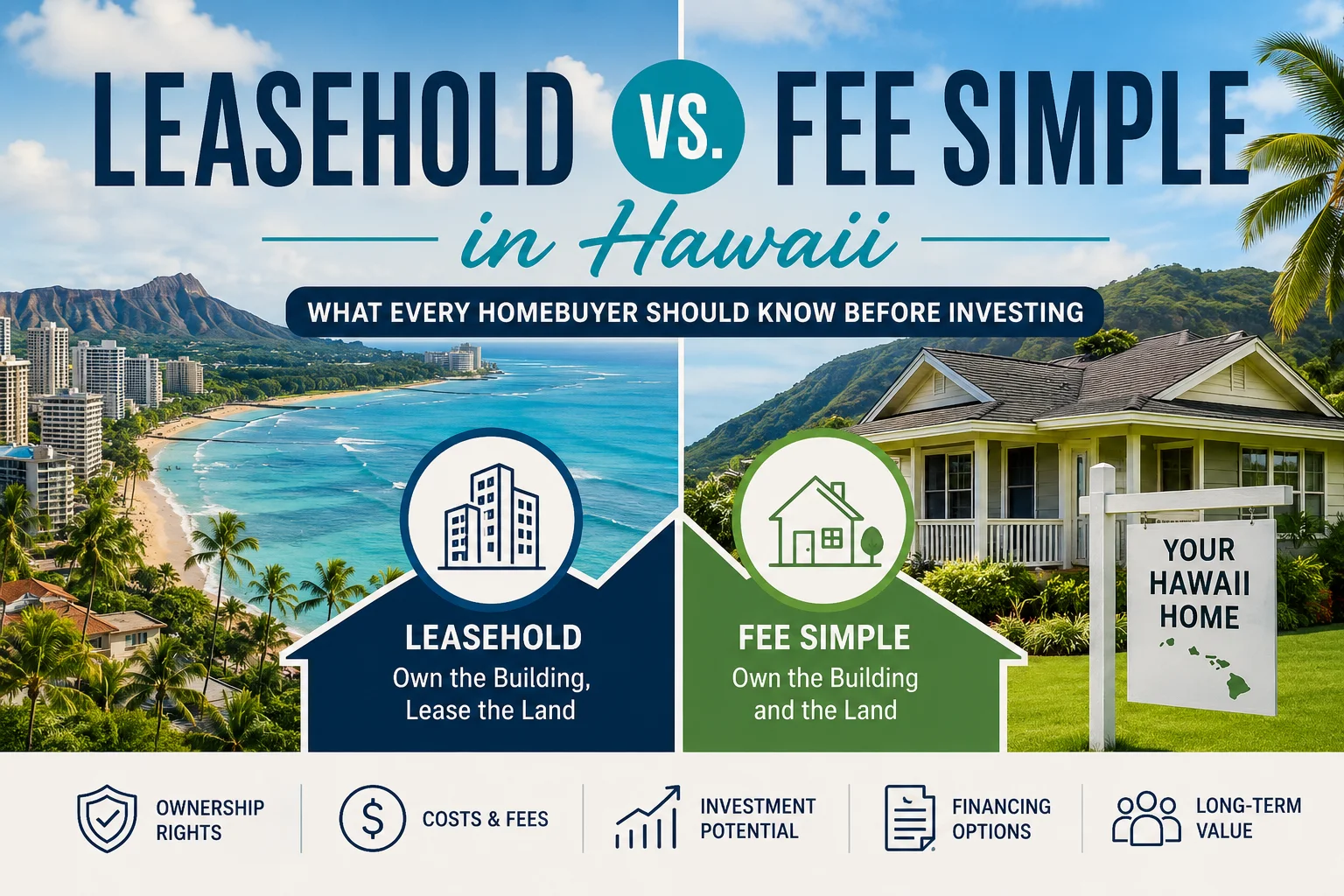
Hawaii’s real estate market operates differently from anywhere else in the country. One of the biggest surprises for mainland buyers? Not every property comes with the land underneath it. Understanding the distinction between leasehold vs fee simple in Hawaii ownership isn’t just useful—it can save you from a costly mistake.
Understanding Property Ownership in Hawaii
What Is Fee Simple Ownership?
Fee simple is the most complete form of property ownership. The buyer owns both the home and the land it sits on. This means full rights to sell, remodel, refinance, or pass the property to heirs without restriction.
What Is Leasehold Ownership?
With leasehold ownership, you own the structure but lease the land from a separate landowner. Lease terms can span several decades, sometimes close to a century, but they do expire. Buyers pay monthly lease rent on top of their mortgage—and when the lease ends, ownership of improvements may revert to the landowner.
Leasehold vs Fee Simple Hawaii: Side-by-Side Comparison
| Feature | Fee Simple | Leasehold |
| Land Ownership | ✔ | ✘ |
| Monthly Lease Rent | No | Yes |
| Financing Availability | Easier | More Limited |
| Resale Value | Higher | Can Decline Near Lease End |
| Appreciation Potential | Strong | Depends on Lease |
| Long-Term Investment | Excellent | Situational |
| Estate Planning | Easier | Lease Restrictions May Apply |
Why Does Hawaii Have Leasehold Properties?
Hawaii’s leasehold market is rooted in history. Large estates and royal land trusts—including Bishop Estate and the Queen Emma Land Company—retained ownership of significant land parcels rather than selling them outright. This practice shaped how property is bought and sold today, particularly on Oʻahu, where leasehold listings remain more common than on other islands.
Pros of Buying Fee Simple Property
Fee simple ownership offers strong appreciation potential, easier mortgage approval, and a larger pool of buyers when it’s time to sell. Renovations require no landlord approval. Heirs inherit full ownership without lease complications. For long-term wealth building, fee simple is generally the more straightforward path.
Pros of Buying Leasehold Property
Leasehold properties aren’t automatically a bad investment. Lower purchase prices make them an accessible entry point into the Hawaii market—especially in neighborhoods that would otherwise be out of reach. For retirees or buyers with a short- to medium-term horizon, the reduced upfront cost can make financial sense when the lease has sufficient time remaining.
Risks Every Buyer Should Consider
Lease expiration is the most significant risk. As the end date approaches, resale value typically drops and the buyer pool shrinks. Improvements may revert to the landowner upon expiration.
Lease rent renegotiation is another concern. Periodic increases can be steep, impacting your monthly budget in ways that are difficult to predict.
Financing challenges are common. Some lenders won’t finance leasehold properties at all, and those that do may require larger down payments or shorter loan terms.
Which Option Is Better for Different Buyers?
First-time homebuyers should lean toward fee simple for long-term security, though leasehold may fit a tighter budget if the lease is long.
Military families facing PCS orders need a clear exit strategy. Leasehold can complicate resale timelines, especially if the lease is shorter.
Investors should weigh cash flow against appreciation goals and review lease expiration carefully before committing.
Vacation home buyers should consider their holding period and rental plans—leasehold may work short-term, but appreciation potential is limited.
Questions to Ask Before Buying a Leasehold Property
- When does the lease expire?
- Can the lease be extended?
- How much is the current lease rent, and when is the next renegotiation?
- Are there restrictions on selling?
- Is conventional financing available?
- Can the land be purchased at a later date?
- Are there pending special assessments?
Expert Tips for Choosing Between Leasehold and Fee Simple
- Review all lease documents before making an offer.
- Work with an experienced Hawaii REALTOR® familiar with both ownership types.
- Calculate total cost of ownership—not just the purchase price.
- Speak with lenders early to understand your financing options.
- Compare similar fee simple properties to gauge whether the leasehold discount justifies the tradeoffs.
Make the Right Call for Your Situation
Neither ownership type is universally better. The right choice depends on your investment timeline, financial goals, and risk tolerance. Buyers who understand how leasehold vs fee simple Hawaii ownership works are far better positioned to make a confident decision—and avoid surprises down the road. Before purchasing either property type, consult a knowledgeable Hawaii real estate professional who can guide you through the details specific to each listing.